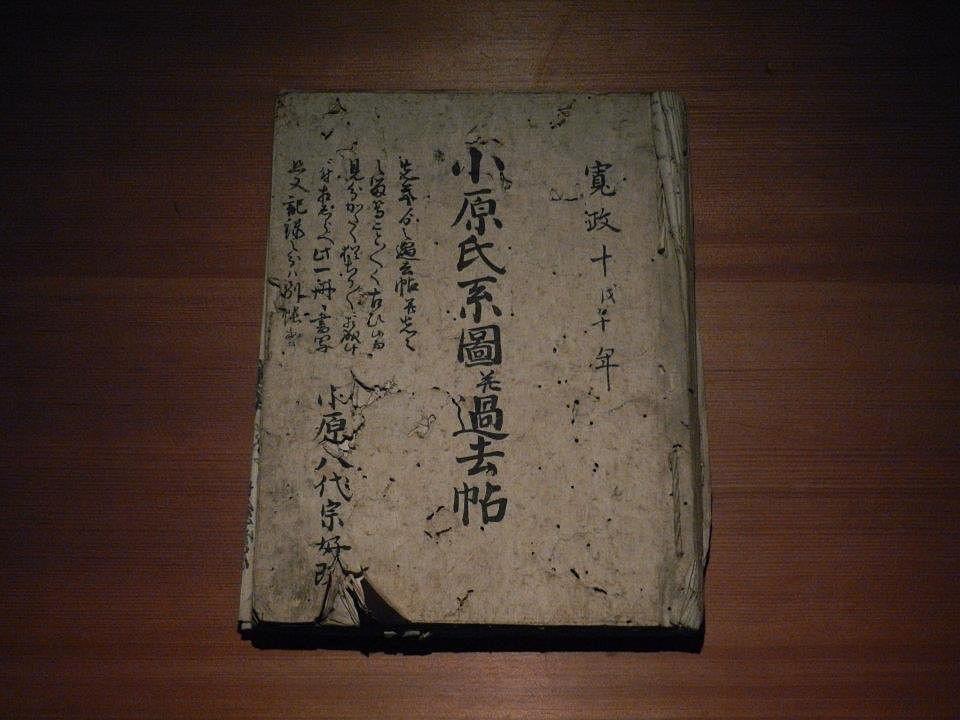
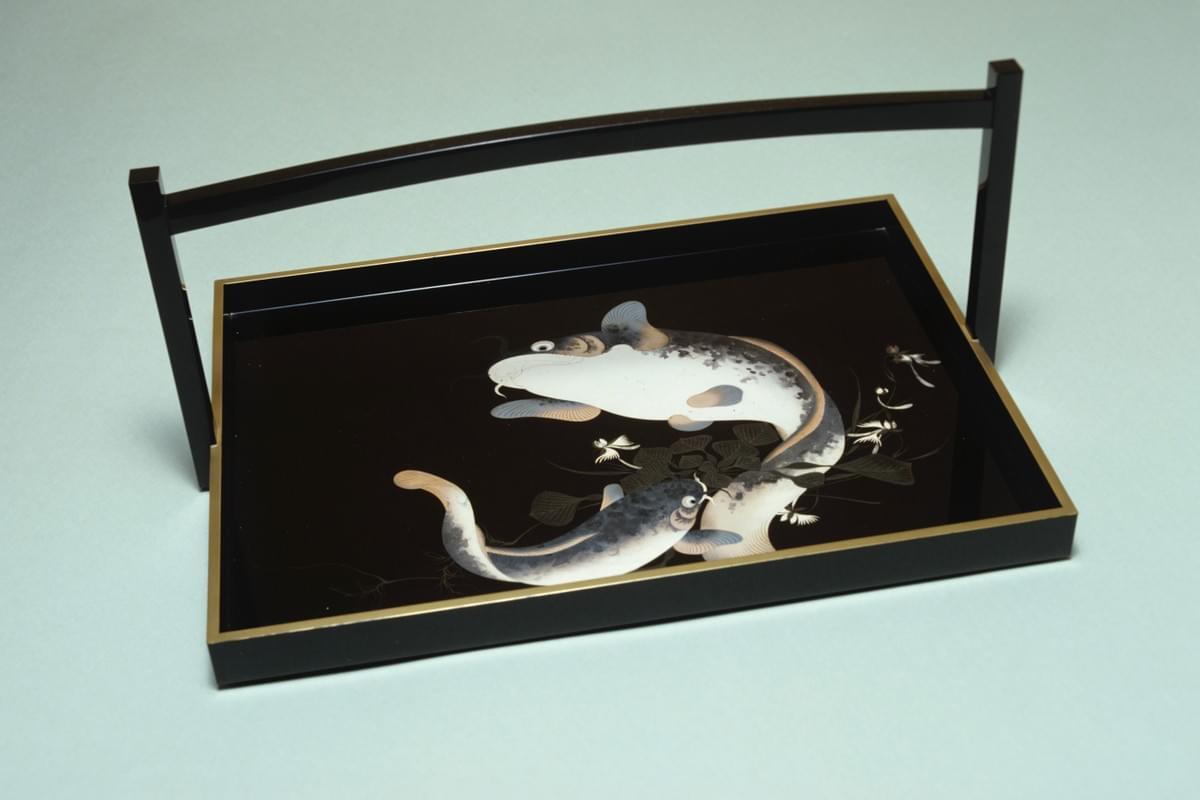
城端蒔絵について
About Jōhana Maki-e
- Since 1575 -

城端蒔絵のはじまり
The Beginnings of Jōhana Maki-e
小原家は、第五十九代「宇多天皇」の第八皇子「敦實親王」を祖とする近江源氏・佐々木氏の流れを汲む。文明7年(1475)、本願寺八世 蓮如が越前から加賀・越中へと赴く際に、近江源氏・佐々木高範の裔で、越前朝倉義景の家臣であった佐々木入道祐玄が随身して、砺波郡梅原村(南砺市梅原)に来て定住した。祐玄は文亀年間(1501-1504)に80余歳で没したが、その曾孫佐々木又兵衛之綱が天正元年(1573)、23歳のときに城端へ移住し、同3年(1575)に大工町で髹工(塗師屋)を家業として塗師屋又兵衛と名乗り、「城端塗」の基礎をきずいた。これが小原家における塗師としての元祖であり、城端漆工のはじまりでもある。
その頃、南朝の遺臣 畑六郎左衛門時能の裔で、佐々木氏とも一族である畑治五右衛門好永という漆工が城端近郊の大鋸屋村に住んでいた。好永は天正年間(1573-1592)に肥前長崎で唐人から「彩漆密陀絵法(いろうるしみつだえほう)」を学び、城端に伝え「城端蒔絵」の基礎をきずいた。
好永はその技法を息子の二代 治五右衛門宜安に伝えた。しかし宜安は後に医師に転じたので、塗師屋又兵衛の孫の三代 徳左衛門信好に密陀絵法を伝授した。承応3年(1654)、信好37歳のときである。これより信好は、自家伝来の髹漆の技法に彩漆密陀絵法を加えてさらに研鑽を積み、白蒔絵の特色をつくって多くの作品を制作した。
加賀藩五代藩主 前田綱紀が、当時諸国名工の最高水準の技法を集めた「百工比照」という技術資料がある(東京駒場・前田育徳会蔵)。そのなかに、五十嵐道甫・椎原市太夫らとともに、治五右衛門の城端塗があげられていることは、当時の城端蒔絵の水準の高さを示すものである。これは信好の作品ではないかと推定されている。
信好の長男、四代 理右衛門亮好は従来の家名「佐々木」を廃して「小原」と改姓し、六代 治五右衛門忠好以降、代々「小原治五右衛門」を襲名している。
The Ohara family descended from the Omi-Genji and Sasaki clan, whose ancestor was “Imperial Prince Atsumi,'' the eighth prince of the 59th “Emperor Uda''. In the year 1475, when Rennyo, the 8th head-priest of the Hongan-ji Temple travelled from Echizen (present day Northern Fukui Prefecture) to Kaga (Southern Ishikawa Prefecture) and Etchu (Toyama Prefecture), he was attended by a vassal of the Echizen warlord Yoshikage Asakura, Nyudo Yugen Sasaki, descendant of Takanori Sasaki, a member of the Omi-Genji clan. Nyudo Yugen settled down in a village called Umehara in the Tonami District (present day Umehara, Nanto city, Toyama Prefecture), and passed away at the age of 80 some time between 1501 to 1504. His great-grandson Yukitsuna Matabei Sasaki moved to Jōhana in 1573 at the age of 23, starting the family lacquering business in Daikumachi town, adopting the name Matabei the Lacquerer, thus the foundation of “Jōhana Lacquering” was built. This became the origin of the Ohara’s family lacquer trade tradition, and marks the beginning of Jōhana Lacquering.
At that time, an urushi lacquerer from another branch of the Sasaki clan, HATA Jigoemon (Yoshinaga), lived in the Village of Ogaya near Jōhana. A descendant of HATA Rokurozaemon (Tokiyoshi), who served the Southern Court in the previous civil war, Yoshinaga learnt the art of “Multi-Coloured Mitsuda-e” from Tang Dynasty Chinese in Nagasaki, Hizen ( present day Saga and Nagasaki Prefectures),some time during the Tensho period (1573 to 1592). By bringing such techniques to the Jōhana area, he played an important role in building the foundation of Jōhana Maki-e.
The techniques of Yoshinaga were succeeded by his son, HATA Jigoemon II (Gian). Gian later became a medical doctor, however, and taught those techniques to the grandson of Matabei the Lacquerer, Nobuyoshi Tokuzaemon, the third successor of the family in 1654, when Nobuyoshi was 37 years of age. Nobuyoshi combined the traditional lacquering techniques of his family with the Multi-Coloured Mitsuda-e techniques, and after much diligent effort, he developed the characteristic white maki-e, creating many wonderful pieces.
The fifth lord of Kaga, Tsunanori Maeda, compiled an encyclopaedia of crafts, “A Comparison of One Hundred Crafts” (Maeda Ikutokukai Collection, Komaba, Tokyo), recording in its pages the most skillful craftsmen and their most famous arts from all corners of the country. Listed among renowned artists such as Doho Igarashi and Ichidayu Shiihara was the Jōhana Lacquering of Jigoemon, indicating the superb quality of Jōhana Maki-e at the time. The works featured in the encyclopaedia are thought to be creations by Nobuyoshi.
Sukeyoshi Riemon, the fourth successor and the eldest son of Nobuyoshi, discarded the old family name of Sasaki and replaced it with Ohara. From the sixth successor, Tadayoshi Jigoemon, the name of “Jigoemon Ohara” has been passed down from generation to generation.

城端蒔絵の特色
The Characteristics of Jōhana Maki-e
城端蒔絵は「城端塗」または「治五右衛門塗」とも呼ばれ、美術工藝界に特異な存在として知られており、一般の蒔絵とは趣を異にする。
元来、漆で発色することのできるのは、朱・黒・黄・緑・茶の五彩に限られ、白を発色することは不可能とされていた。城端蒔絵はこの白色を表すことを特色とし、花鳥文様などを描いて生態そのままの色調ぼかしを表現する彩漆蒔絵技術を一子相伝の秘法として今日まで伝えるものである。これには、初期の作品に多く見られる「密陀絵法」と、それを基にしてさらに工夫を加え創出された、中期以降の作品に多く見られる「白蒔絵法」とがある。
蒔絵とは本来、漆で文様を描きその上に金銀の粉を蒔き付ける技法であるが、加賀藩では加賀蒔絵保護のため藩外での金銀の使用を禁じた。豪奢な加賀蒔絵に対して、城端蒔絵は白をはじめ各種の色彩を自由に駆使し、瀟洒で雅味のある独特の様式を案出したものである。
Also known as Jōhana Lacquering or Jigoemon Lacquering, Jōhana Maki-e is a unique curiosity in the world of fine and applied arts, and completely different from conventional maki-e.
In regular maki-e, only the five colours of red black, yellow, green and brown can be developed from the lacquering, and it was deemed impossible for the colour white to be formed. Jōhana Maki-e, however, characteristically makes use of the colour white, developed using secret techniques for multi-coloured maki-e passed down from a single line of succession, and its availability makes a wide variety of colour shadings possible when drawing wildlife and nature and other scenery. This technique combines the litharge techniques seen in the early works of the family, and through much research and hard work based on those techniques, it became the “White Maki-e” seen in works some time around the middle of the line of succession.
Originally, maki-e is an artform where gold and silver powder is sprinkled on patterns drawn with lacquer, but the warlord of Kaga prohibited the use of gold and silver outside of his feudal domain in order to protect the local Kaga Maki-e. In contrast to the extravagant Kaga Maki-e, Jōhana Maki-e uses a variety of colours made possible by the white lacquer, creating unique illustrations that are vivacious yet elegant.
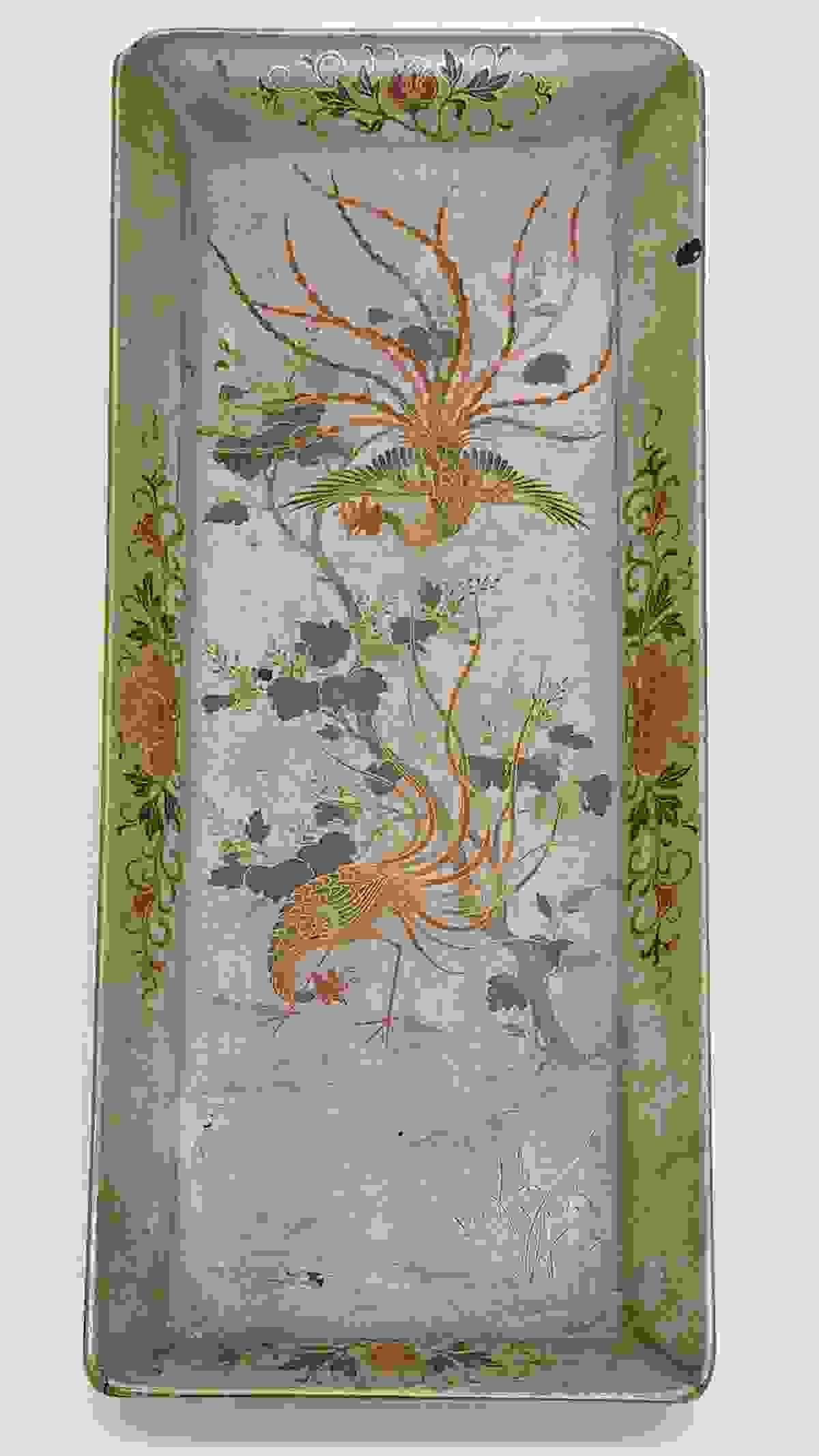
治五右衛門《桐鳳凰密陀絵盆》
初期
縦33.4 × 横13.5 × 高2.6 ㎝
東京藝術大学蔵
Jigoemon, Phoenix and Paulownia
Early period,Scroll Tray; Mitsuda-e
h. 1 1/32 x w. 5 5/16 x d. 13 5/32 in. (2.6 x 13.5 x 33.4 ㎝)
[ The University Art Museum, Tokyo Collection ]密陀絵について
About Mitsuda-e
密陀絵という呼称は、顔料を練り合わす油に密陀僧(一酸化鉛)を混入するため名付けられたもので、東洋における油絵の先駆的なものである。古代に中国から伝わり、我が国では正倉院に数多く収蔵されている作品からみて、密陀絵の手法が奈良時代に盛んであったことがわかる。
しかし、平安以後は密陀絵の作品を作るものがいなくなり、長らく衰退していたが、畑治五右衛門好永が城端に伝え、復活させたのである。
密陀絵は「唐法描漆」、「光彩描漆」とも称し、初期の作品に多い。
柴田是眞が愛蔵した「桐鳳凰密陀絵盆」(東京藝術大学蔵)は、昭和四年(1929)平凡社発行の「世界美術全集」にカラーで所載された。
The name Mitsuda-e or lacquering comes from the method of mixing litharge (lead monoxide) into the oil that combines with the paint. It is the precursor of oil painting in the east. Originally from China, it was a very popular technique during the Nara Period, as seen in the vast collection of works in Shosoin of Japan. However, after the Heian Period Mitsuda-e faded out from art history for a long time, and it was only until HATA Jigoemon (Yoshinaga) brought the technique to Jōhana that enabled its revival.
Mitsuda-e were also called “Tang lacquering” or “glaze lacquering”, and were frequently seen in the earlier works. The “Phoenix and Paulownia Mitsuda-e Scroll Tray” a favorite collection of Zeshin Shibata (Collection of The University Art Museum, Tokyo) was included in the “Complete Works of World Arts” published by Heibonsha in 1929.

城端蒔絵
小原治五右衛門 系譜
Genealogy
城端塗元祖
佐々木又兵衛之綱 (1550 - 1636)
城端蒔絵元祖
畑治五右衛門 好永
二代 畑治五右衛門 宜安
二代 佐々木六右衛門 達仲 (1596 - 1676)
三代 佐々木徳左衛門 信好 (1617 - 1699)
四代 小原理右衛門 亮好 (1645 - 1719)
五代 小原源右衛門 貞好 号:雲山軒 (1663 - 1736)
六代 小原治五右衛門 忠好 (1703 - 1771)
七代 小原治五右衛門 林好 号:稀雄 (1729 - 1805)
八代 小原治五右衛門 宗好 号:一白 (1764 - 1813)
九代 小原治五右衛門 房好 号:雄蔵 (1787 - 1859)
十代 小原治五右衛門 (1805 - 1882)
十一代 小原治五右衛門 号:得賀 (1835 - 1879)
十二代 小原治五右衛門 号:白晁 (1867 - 1918)
十三代 小原為治 (1896 - 1983)
十四代 小原治五右衛門 号:白照 (1917 - 2003)
十五代 小原治五右衛門 好博 (1951 - )
十六代 小原治五右衛門 好喬 (1979 - )

小原治五右衛門
歴代略伝
A Brief History of the Ohara Family
城端塗 元祖 / Founder of Jōhana Lacquering
佐々木 又兵衛 之綱 / SASAKI Matabei Yukitsuna
1550 - 1636
近江源氏・佐々木高範の裔、佐々木入道祐玄の曾孫。天文19年(1550)生。幼名は久太郎。天正元年(1573)、23歳のとき梅原村より城端へ移住し、同3年(1575)に大工町で塗師屋を開き「塗師屋又兵衛」と称した。小原家における漆芸の始祖であり「城端塗」の元祖である。寛永13年(1636)3月12日、86歳にて没す。
城端蒔絵 元祖 / Founder of Jōhana Maki-e
畑 治五右衛門 好永 / HATA Jigoemon (Yoshinaga)
南朝の遺臣・畑六郎左衛門時能の裔。天正年間(1573 - 1592)、長崎で唐人より「彩漆密陀絵法」を学び、城端に伝え「城端蒔絵」の基礎を築く。
畑 治五右衛門 宜安 / HATA Jigoemon II (Gian)
治五右衛門好永の子。承応3年(1654)、医師に転じ、好永から授かった彩漆密陀絵法を三代 徳左衛門信好に伝授する。
二代 / Second successor
佐々木 六右衛門 達仲 / SASAKI Rokuemon (Tachinaka)
1596 - 1676
又兵衛之綱の長男。慶長元年(1596)生。延宝4年(1676)7月28日、80歳にて没す。
三代 / Third successor
佐々木 徳左衛門 信好 / SASAKI Tokuzaemon (Nobuyoshi)
1617 - 1699
六右衛門達仲の長男。元和3年(1617)生。承応3年(1654)、37歳の時に好永の子・宜安(医師に転業)より密陀絵法を伝受し、白蒔絵の特色をつくり城端蒔絵の名を世に広めた。その作品は加賀藩五代藩主 前田綱紀の「百工比照」のなかに入る。元禄12年(1699)1月5日、82歳にて没す。
四代 / Fourth successor
小原 理右衛門 亮好 / OHARA Riemon (Sukeyoshi)
1645 - 1719
徳左衛門信好の長男。正保2年(1645)生。貞享5年(1688)、加賀藩の名工 清水九兵衛とともに城端善徳寺の塗師頭取となり、髹漆に従事する。宝永年間(1704 - 1711)、60歳代において従来の家名「佐々木」を「小原」に改めた。享保4年(1719)10月8日、74歳にて没す。
五代 / Fifth successor
小原 源右衛門 貞好 / OHARA Genemon (Sadayoshi)
号:雲山軒 / nickname Unzanken
1663 - 1736
徳左衛門信好の次男で亮好の弟。亮好に男児がなかったので五代目を継いだ。寛文3年(1663)生。雲山軒と号す。元文元年(1736)8月11日、73歳にて没す。
六代 / Sixth successor
小原 治五右衛門 忠好 / OHARA Jigoemon VI (Tadayoshi)
1703 - 1771
源右衛門貞好の長男。元禄16年(1703)生。幼名は吉十郎、若名は茂右衛門、後に治五右衛門。以後、代々「小原 治五右衛門」を襲名する。明和8年(1771)10月7日、68歳にて没す。
七代 / Seventh successor
小原 治五右衛門 林好 / OHARA Jigoemon VII (Shigeyoshi)
号:菊斉稀雄 / nickname Kikusai Kiyū
1729 - 1805
治五右衛門忠好の甥(忠好の姉の子)。忠好に男児がなかったので養子となり七代目を継いだ。享保14年(1729)生。幼名は又十郎、若名は源右衛門。俳名を方歩斉几好、51歳で五一、61歳で六一、70歳の春に菊斉稀雄と号す。寛政5年(1793)、65歳で隠居し、隠居名を惣次という。城端蒔絵「中興の祖」と仰がれ、多くの門弟を育て城端塗の最盛期を築き、曳山・庵屋台をはじめ多くの作品を残した。謡曲や囲碁にも巧者であり、余技として雛人形も制作し、和歌・俳諧にも長じ文藻に富んだ。安永の曳山騒動にあっては身を挺して尽力した豪気な一面は多くの人に感動を与えた。寛政10年(1798)に古希を記念して「自画像」(南砺市指定文化財・南砺市蔵)を描き、辞世の句「蓮の実やこゝを去ること遠からず」は水月寺境内に「蓮子塚」として現存している。文化2年(1805)9月13日、76歳にて没す。
八代 / Eighth successor
小原 治五右衛門 宗好 / OHARA Jigoemon VIII (Muneyoshi)
号:一白 / nickname Ippaku
1764 - 1813
治五右衛門林好の次男。長男早世のため8代目を継ぐ。宝暦14年(1764)2月2日生。幼名は久太郎、若名は吉左衛門。李東父または李東氏一白と号し、作品には一白館、一白斉、一白庵とも署名した。安永9年(1780)10月、17歳のとき加賀藩九代藩主 前田重教が城端へ御成りにつき元服した。蒔絵の意匠、技術に優れ、和歌・俳諧をたしなむ。また天文学者「西村太冲」を友として天文学に通じ、蘭学など西洋学門を修得し多方面に才能を発揮した。文化10年(1813)7月9日、49歳にて没す。
九代 / Ninth successor
小原 治五右衛門 房好 / OHARA Jigoemon IX (Fusayoshi)
号:雄蔵 / nickname Yūzō
1787 - 1859
七代 治五右衛門林好の四男で宗好の弟。天明7年(1787)5月24日生。幼名は北松、若名は林房、のちに雄蔵。俳名を山朝、隠居名は茂兵衛と称す。塗立の技に長じ名工の誉れが高い。代表作「彩漆鯰模様手付盃盆」(富山県指定有形文化財)のほか、弘化3年(1846)には曳山御神像の布袋像(出丸町)を改作。また、善徳寺の「唐金燈籠」の意匠を考案する。安政6年(1859)10月14日、72歳にて没す。
十代 / Tenth successor
小原 治五右衛門 / OHARA Jigoemon X
1805 - 1882
八代 治五右衛門宗好の長男。文化2年(1805)11月4日生。幼名は久太郎。慶応4年(1868)正月、62歳にて隠居し隠居名を六右衛門と称す。先代とともに塗立の名手で朱漆塗を得意とし、仏壇塗には独特の妙技を振った。明治15年(1882)7月21日、76歳にて没す。
十一代 / Eleventh successor
小原 治五右衛門 / OHARA Jigoemon XI
号:得賀 / nickname Tokuga
1835 - 1879
十代 治五右衛門の長男。天保6年(1835)8月15日生。幼名は北松、後に得賀と号す。狩野派の絵を学び絵画にも長じる。明治11年(1878)、天皇北陸御巡幸のみぎり「鶏に花籠蒔絵小蓋」が御買い上げの栄に俗した。明治12年(1879)7月17日、43歳にて没す。
十二代 / Twelfth successor
小原 治五右衛門 / OHARA Jigoemon XII
号:白晁 / nickname Hakuchō
1867 - 1918
十一代 治五右衛門(得賀)の長男。慶応3年(1867)9月21日生。幼名は久太郎、後に白晁と号す。12歳にて父・得賀に死別後、家伝の技法を研鑽習得し、パリの万国博をはじめ内外の展覧会・博覧会に出品し、受賞した。大正7年(1918)12月5日、51歳にて没す。
十三代 / Thirteenth successor
小原 為治 / OHARA Tameji
1896 - 1983
十二代・治五右衛門(白晁)に男児がなく、長女みすいの養嗣子となる。明治29年(1896)4月1日生。治五右衛門白晁より蒔絵を学ぶが、後に刺繍業に転じ、京都へ移住する。昭和58年(1983)5月2日、87歳にて没す。
十四代 / Fourteenth successor
小原 治五右衛門 / OHARA Jigoemon XIV
号:白照 / nickname Hakushō
1917 - 2003
為治の長男。大正6年(1917)11月25日生。若名は治寿、後に治五右衛門に改名し、白照と号す。昭和10年(1935)京都市立美術工芸学校(現京都芸大)漆工科卒業。江馬長閑に京蒔絵を師事する。昭和22年(1947)沖縄より復員後、空白となっていた城端蒔絵を再興し、展覧品を制作する。昭和23年(1948)第4回日展入選、同33年(1958)高松宮家献上品制作。歴代遺作展・個展の開催などを経て伝統の保持に努め、『城端曳山史』の執筆や曳山御神像(城端:東上町「寿老人」・出丸町「布袋」、八尾西町「恵比須」)の修復にも力を注ぎ、城端町文化財保護委員長や曳山調査委員長なども努めた。昭和63年(1988)労働大臣表彰卓越技能章・「現代の名工」、平成元年(1989)勲六等瑞宝章受章。平成15年(2003)4月30日、85歳にて没す。
十五代 / Fifteenth successor
小原 治五右衛門 好博 / OHARA Jigoemon XV (Yoshihiro)
1951 -
十四代・治五右衛門(白照)の長男。昭和26年(1951)4月2日生。昭和45年(1970)金沢美術工芸大学日本画科に入学し、西山英雄、下村正一等の指導を受ける。在学中の昭和48年(1973)日展入選、全関西展橋村賞、県展県展賞。昭和49年(1974)金沢美術工芸大学日本画科卒業。金沢で加賀蒔絵を学んだ後、十四代より城端蒔絵を継承し、日本画家としても活動する。
1978 「城端神明宮春季大祭行列之図」制作 (城虎会奉納・城端神明宮蔵)
1991 「鳳凰」制作 (参九卯辰会奉納・城端神明宮蔵)
2003 「城端曳山祭之図」制作 (曳山祭の重要無形民俗文化財指定記念・城端曳山会館蔵)
2005 県展会員となる
2006 となみ野アート個展 (北日本新聞砺波支社ギャラリー)
2007 県展審査員を務める (計4回)
2008 十五代 小原治五右衛門を襲名
「十五代襲名記念展」 (城端曳山会館)
北日本マンスリーアート個展 (北日本新聞本社ギャラリー)
2009 西上町「竹田山」岩波彫刻(彩色)を修復
2010 南砺市日本画連盟委員長に就任
第6回 南砺市展審査員長を務める
2011 西下町「諌鼓山」諌鼓を復元新調
還暦記念日本画展 (じょうはな織館)
2016 富山新聞芸術賞受賞
【現在】
富山県日本画家連盟常任委員
富山県美術連合会理事
南砺市日本画連盟相談役
南砺市美術連合会常任理事
県展会員
となみ野美術展実行委員
日本画教室「彩好会」主宰
庄川美術館実技講座講師
富山新聞文化センター高岡スタジオ日本画教室講師

七代 小原治五右衛門(稀雄) 自画像
OHARA Jigoemon VII Self-portrait
寛政10年(1798)
南砺市指定文化財

十一代 小原治五右衛門・十二代 小原治五右衛門
OHARA Jigoemon XI and OHARA Jigoemon XII
明治初期 (1868 - 1872)